
Don't Let Finger Injuries Sideline Your Game
Basketball was traditionally considered a “contactless sport”. Over the years, basketball has evolved into a fast-paced, intense and highly physical game. Basketball is well known for knee and ankle injuries; with the hands and fingers often being overlooked.
From “jammed” fingers to dislocations to tendon ruptures, hand injuries often leave players sitting on the sidelines during the season. Whether you’re a serious athlete or weekend scrimmager, being able to identify common hand injuries is key in accessing timely treatment, professional advice and aiming to prevent unnecessary time warming the bench for your team.
Why are hand injuries so common in basketball?
Your hands are constantly in motion during a game; from
- Passing
- Dribbling
- Reaching out to block a shoot
- Shooting
- Catching an unexpected rebound
Why should I see a hand therapist?
- Thorough assessment and referral for medical imaging
- Timely access to a hand surgeon (if appropriate)
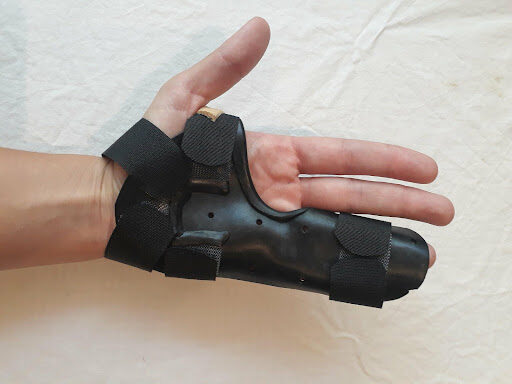
- Customised splint to wear while not playing sport to provide optimal position for healing/protection
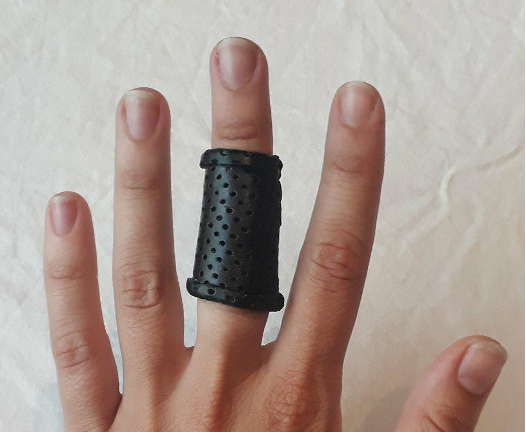
- Customised sports guard to protect injured structures whilst playing. Abides by sporting regulations for equipment/aids.
- Structured rehabilitation and return to play guidance
Common Injuries
Let’s have a look at some of the common finger injuries sustained at basketball and what you can do to enable prevention, further injury and a quick return to sport:
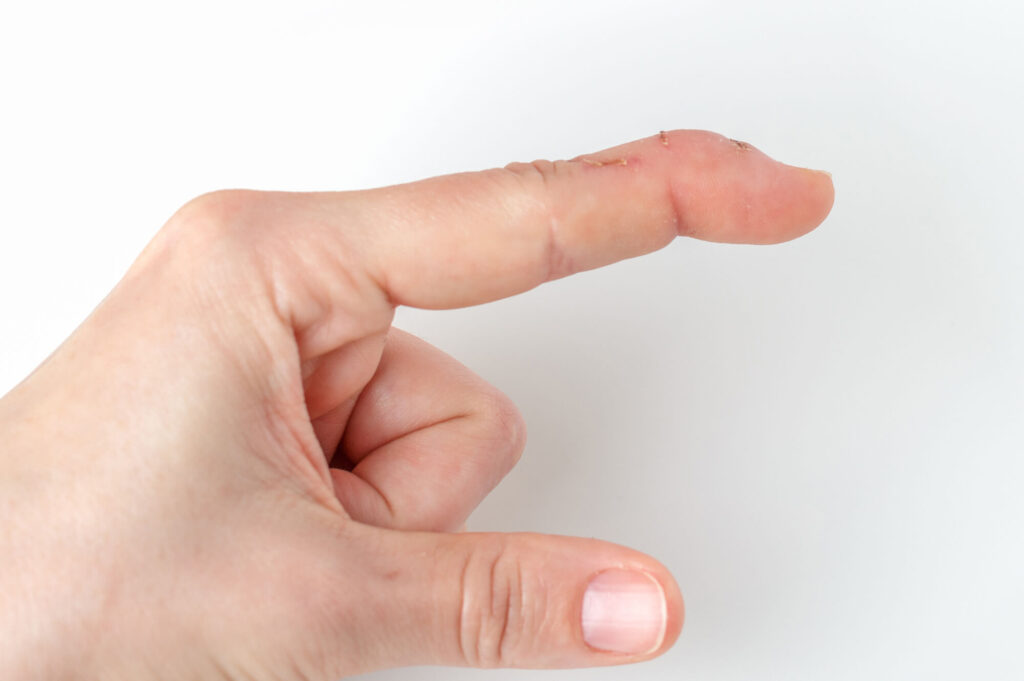
- Injury to the extensor tendon mechanism that straightens your fingertip.
- Mechanism: sudden flexion force to a straight finger e.g., ball to fingertip
- You may notice a “drooped” appearance of your fingertip, pain and swelling.
- Typically managed 6-8 weeks full-time in a finger splint.
- Incorrectly managed, this can lead to a permanent fixed flexion deformity (fingertip always sitting in a bent position) or a swan neck deformity.
- The volar plate is a thick ligament that sits on the palmar side of your hand. It is responsible for preventing hyperextension of your finger joints.
- Mechanism: finger bent too far backwards, struck against a ball or another player, PIP joint dislocation
- You may notice pain, swelling, deformity and difficulty bending/straightening your finger.
- Typically involves swelling management (Coban wrap), finger splint, range of movement exercises.
Central slip injury
- Injury to the extensor tendon mechanism that straightens the middle joint of your finger (PIP joint).
- Mechanism: finger forced into a flexed position
- You may notice pain, swelling, and an inability to straighten the middle joint of your finger.
Jarred fingers
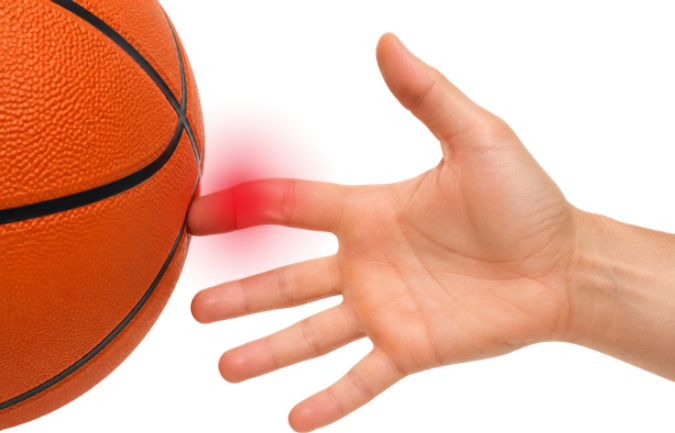
- There are multiple ligaments that surround your finger joints, including the collateral ligaments (on the sides) and the volar plate (ligament on the palmar surface).
- These can become injured after the finger is forcefully struck by a ball or caught by another player.
- You may notice pain, swelling and difficulty bending/straightening your finger.
- An X-ray may be ordered to help distinguish between a finger fracture or a likely ligament sprain.
- Treatment will depend upon the specific structures that are injured.
These are just a few of the injuries that occur during basketball. With timely access to healthcare, appropriate splinting and exercises, the finger injuries don’t have to be niggly and long-lasting. Let’s get you back on court and getting the “3’s”.
Ready to kick-start your treatment and get back on court as soon as possible?
Book in with any of our experienced Physiotherapists or Occupational Therapists today.
Tags : action rehabbasketballbasketball injuriescentral slip extensor tendon injuryfinger injuryfinger splinthandhand injuryhand therapyjammed fingermallet fingerpreventing hand injuriesreturn to sportvolar plate injurywrist injury
Comments are closed
Recent Posts
- Dislocated Your Thumb? How Hand Therapy Can Help You Recover Faster
- Preventing and Treating Finger Injuries in Basketball: What You Need to Know
- Holiday Survival Guide for Parents: Preventing Hand Injuries While Still Letting Kids Have Fun
- Your Guide to Keeping Your Hands Safe from Mishaps This Christmas
- Is Watching Sports Supposed to Hurt This Much? 7 Ways Watching Sports Can Send You to a Hand Therapist
Recent Comments
No comments to show.